Corporate Magician & Mind Reader · UK Wide
Put a corporate magician in the room and directors, clients and interns end up arguing about the same trick.
If you’re looking to hire a corporate magician who can get clients, teams and complete strangers talking without turning the event into a cheesy magic show, you’re in the right place. This is corporate close-up magic and mind reading, moving through the room rather than sitting on a stage waiting for a slot on the agenda. Whether that’s a conference, a product launch, a client dinner or a straightforward business event, a quarter of a century spent doing precisely this in boardrooms and marquees up and down the country says the answer is yes: big reactions, zero disruption to the running order, and nobody left standing there feeling silly.

What This Actually Fixes
Why hire a corporate magician in the first place?
Most events booked through an agenda run into the same few snags on the day. Most corporate entertainment just fills time. Close-up magic actually gets underneath those snags before anyone’s filled in a feedback form.
Small talk gets an actual reason to happen
Two people who’ve never met, one glass of warm white wine, and the same question every time: so what do you do? Give them something impossible to react to together and the conversation runs itself from there.
Arrivals stop feeling like a waiting room
The stretch between the first guest turning up and the room actually filling is where energy dips hardest. A trick right then does more for the atmosphere than another tray of canapes.
Directors and interns react exactly the same way
Nobody’s job title survives watching their own watch disappear. For thirty seconds, everyone in that circle is just a person who can’t work out what happened, whoever signs their expenses.
The schedule keeps moving without anyone noticing him
No slot to programme, no stage to strike, no announcement required. He works the room around whatever’s actually happening and steps back the second the next item’s ready to start.
Timing It Right
The points in the day worth building this around
No two running orders look the same, but most corporate events share a few dead patches. These are where close-up magic does the heaviest lifting.

Arrivals & Welcome Drinks
Guests are stood around with a drink, waiting for enough people to turn up before the formal part starts. That gap is where a well-placed piece of magic does the most to break the ice.
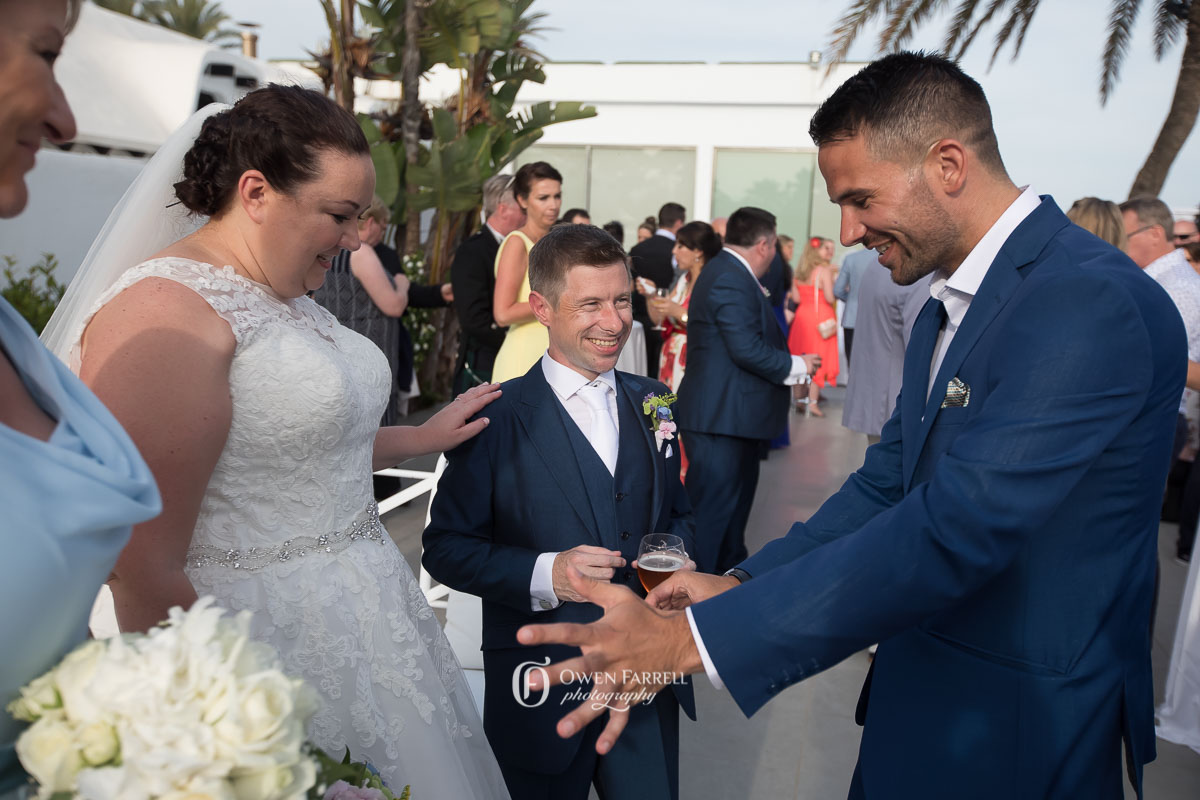
Networking & The Exhibition Floor
Wherever people are meant to be mingling, whether that’s a networking event or a trade show stand, close-up magic gives them a shared moment to talk about instead of hovering near the same spot for the third time.
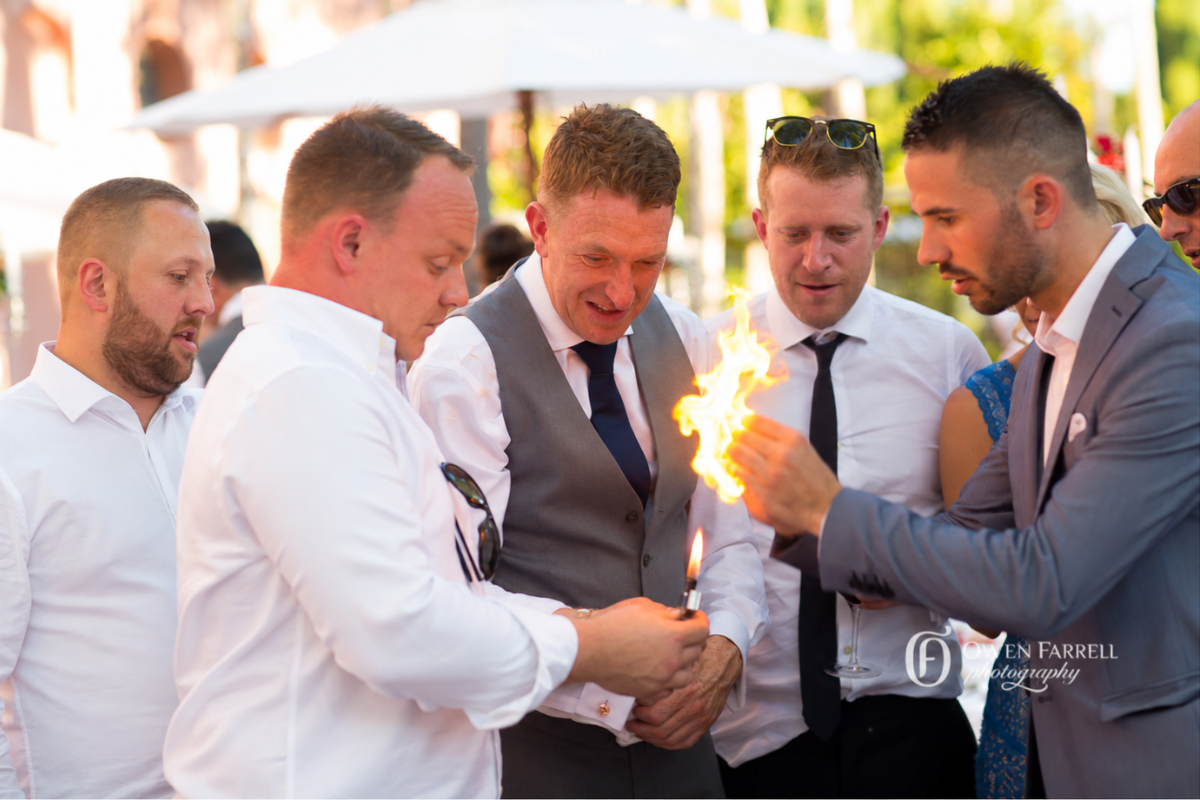
Conference Breaks & Between Sessions
The gap between one speaker finishing and the next one starting is usually dead air. A conference magician working that gap gives people something they’re still discussing when they sit back down.
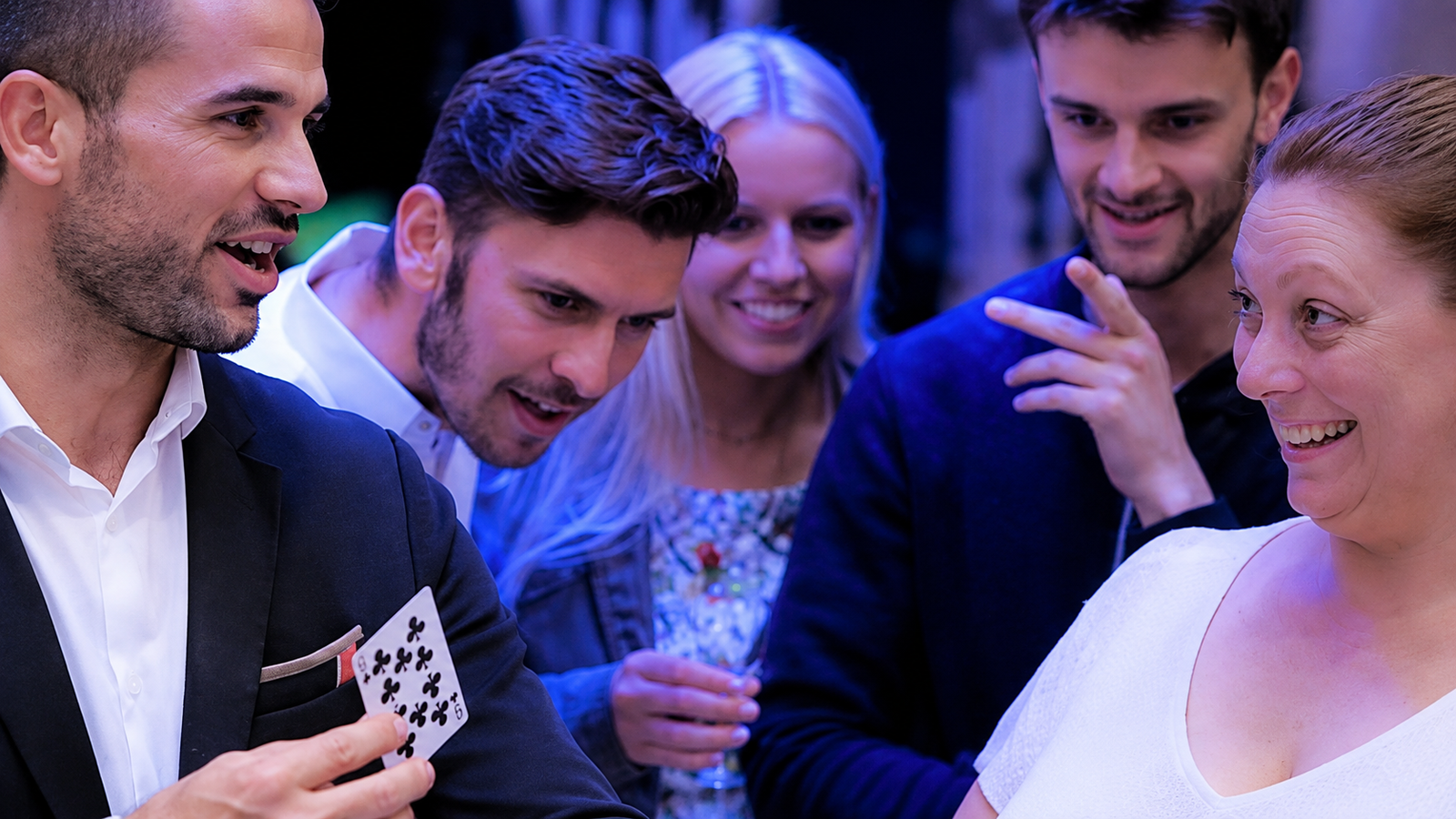
Evening Reception & After The Formalities
Once the speeches, awards or presentations are done and the room’s meant to relax, this is where the night properly gets going and the reactions get louder.
Reactions, Not Rehearsals
HR approved. The reactions less so.
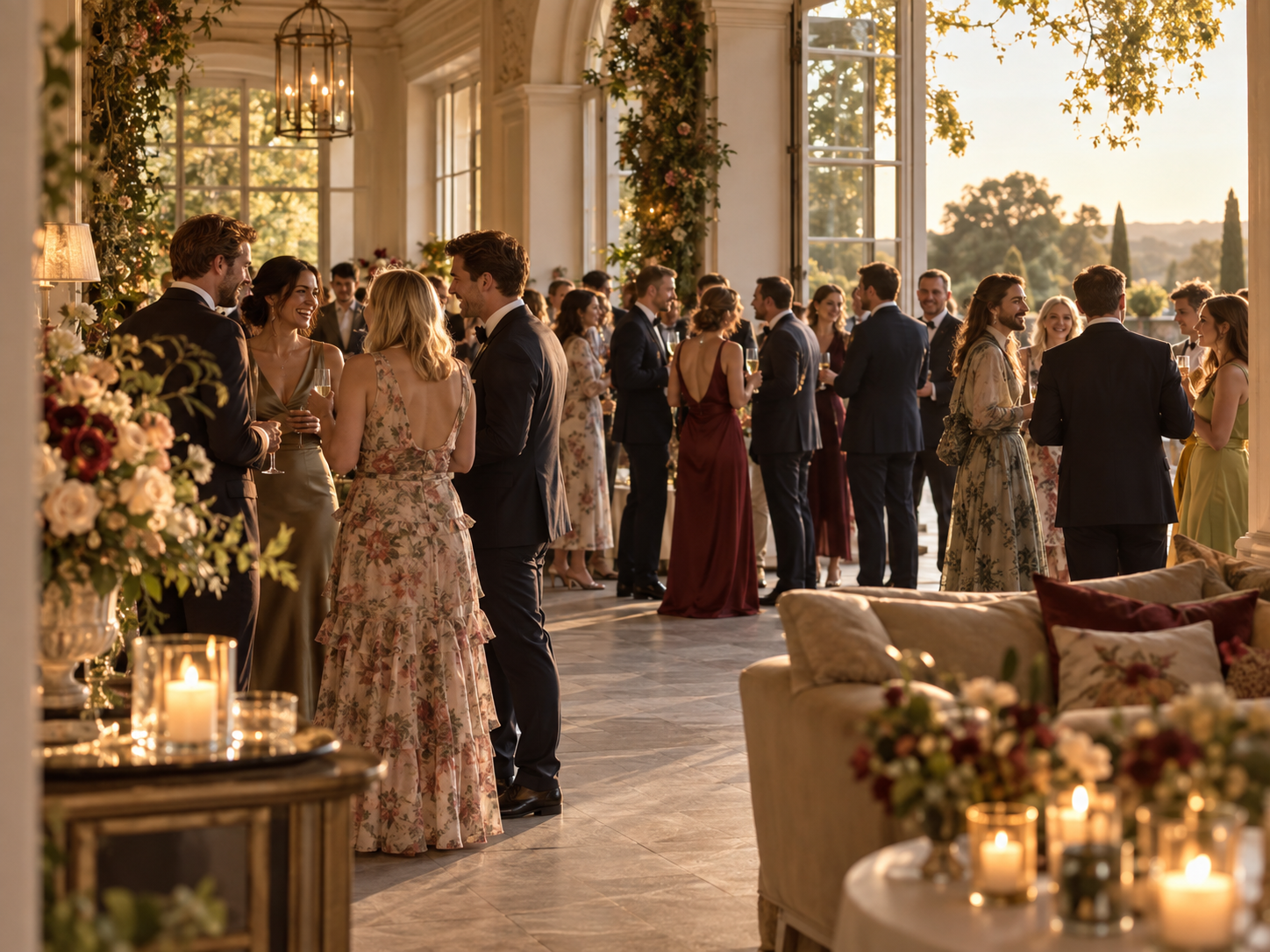
No actors, no retakes, and nobody told to look amazed for the camera. Just a room full of professionals who genuinely weren’t expecting any of this, caught reacting in real time.
Real guests, real event, genuine reactions. The only thing rehearsed here is the trick itself.
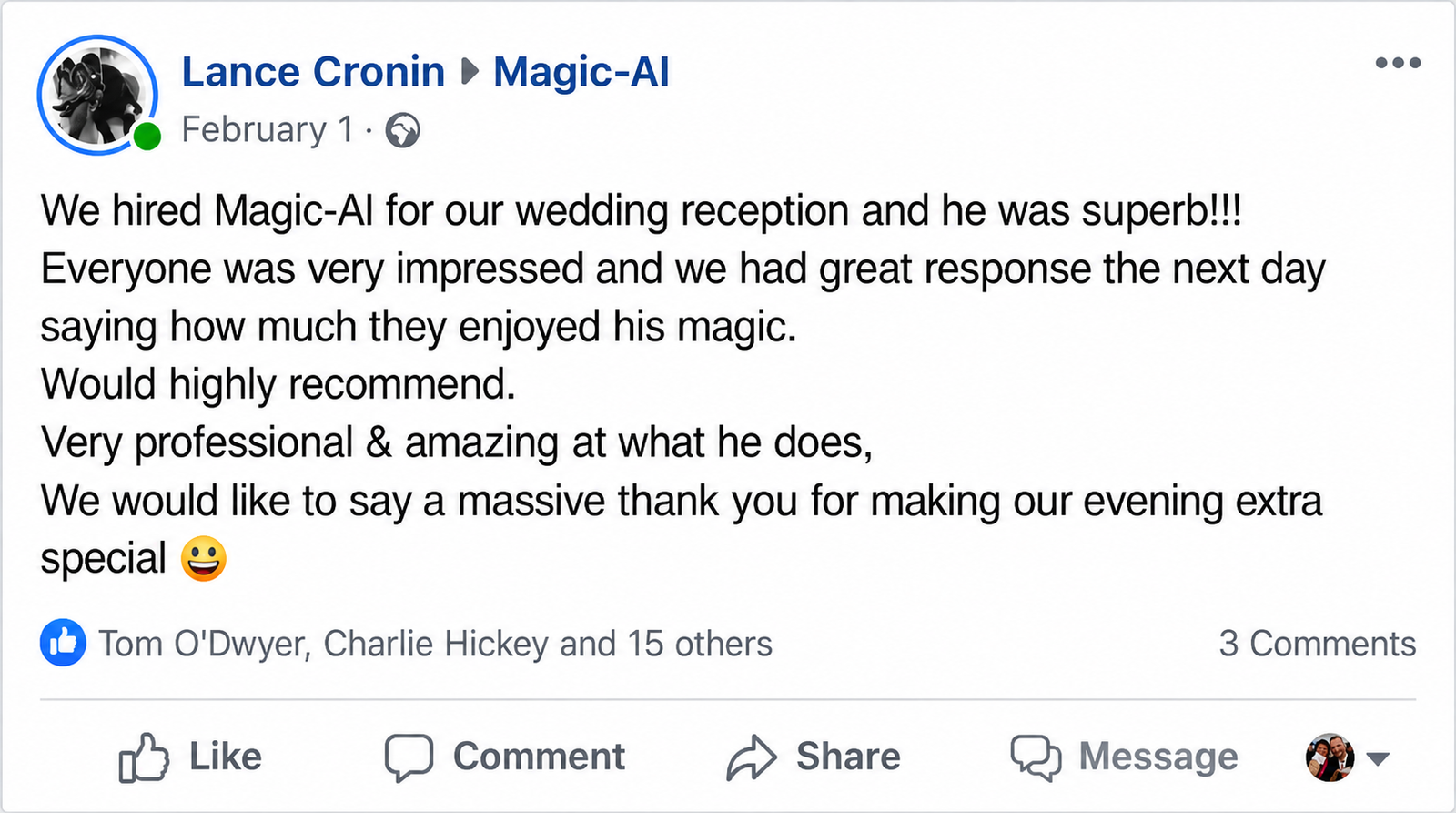
On The Record
What people said when nobody was checking their watch
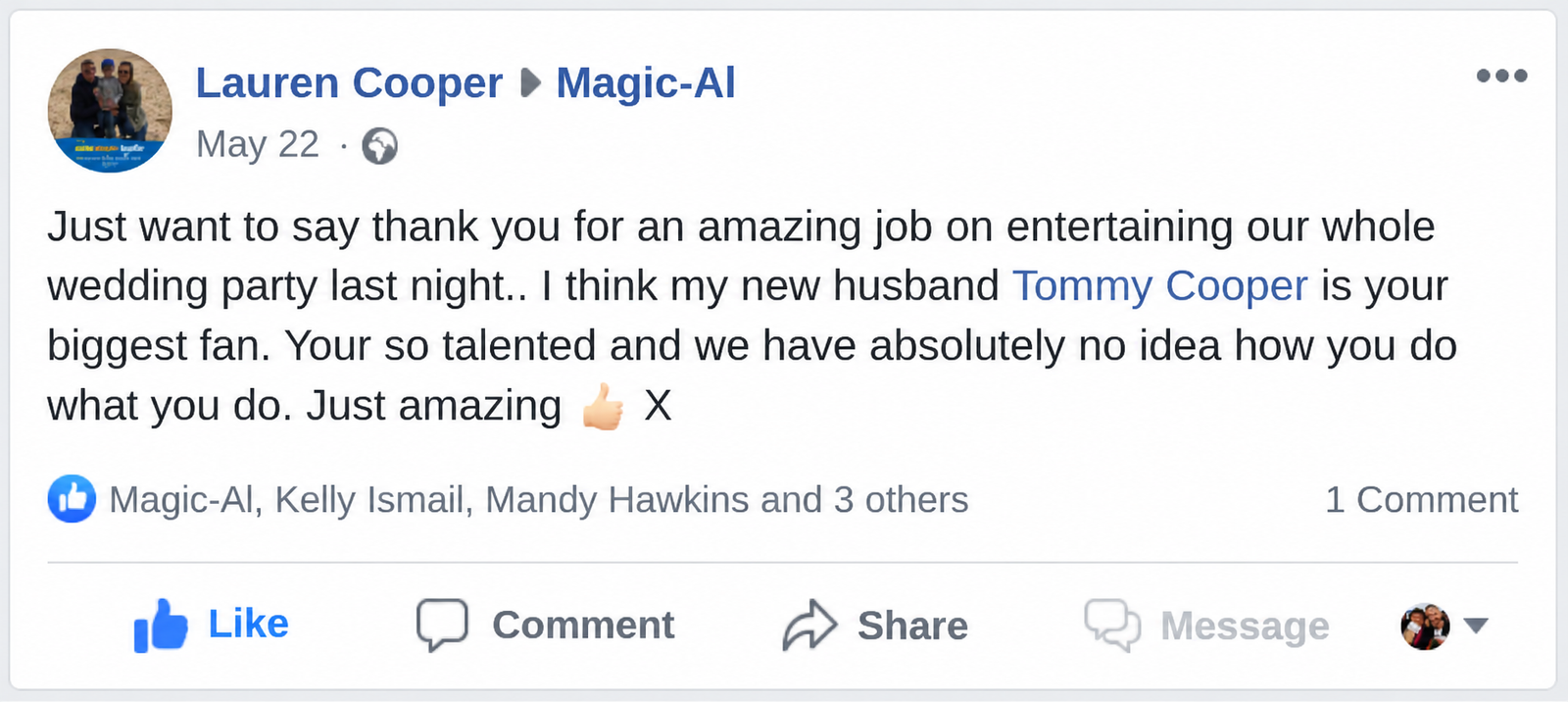
This is genuine feedback, left by clients and guests after Al packed up and went home from conferences, launches, dinners and everything else on this page. Different rooms, same reactions.
Two And A Half Decades Of Boardrooms
Here’s the difference all that time in the room actually makes
Nothing on a CV replaces the specific instincts you only pick up from doing this in front of paying clients for twenty-five years.
- Turning up early enough that nobody’s checking their phone wondering where he is
- Dressing appropriately for the room, whether that’s black tie or a lanyard and a name badge
- Reading a group in seconds: who wants pulling in, who’d rather watch from near the bar
- Never once making a senior guest feel exposed in front of their own team
- Working comfortably around AV, speeches, catering timings and whatever’s just changed at the last minute
- Switching pace between a table of directors and a table of graduate hires without either noticing the gear change
- Knowing exactly when to add energy to a flat room, and when to quietly disappear so the next part of the agenda can start
- Talking confidently with clients and VIPs without ever needing someone to make the introduction first
None of that comes from knowing good tricks. It comes from doing this in enough boardrooms, marquees and conference halls to know how a room actually behaves, which is usually why people choose to hire a corporate magician with real mileage behind him rather than take a chance on someone new.
Where This Gets Booked Most
Where a corporate magician actually earns his keep
Conferences, launches, awards nights, team building days and everything in between. If your event involves a room full of people who don’t entirely know each other yet, this fits. Still hunting for somewhere to put everyone? Corporate event venues on Tagvenue are worth a browse before somebody suggests the same hotel conference room you used last year.

Not The Corporate Entertainer You’re Picturing
Meet Al
I’m Al, or Magic-Al if we’re being formal about it, which given what I do for a living, we generally aren’t.
Twenty-five years of close-up magic and mind reading, most of it spent in rooms with a dress code stricter than mine: conferences, awards nights, client dinners, product launches, the lot.
I’m not there to be wheeled out for ten minutes on a stage while everyone claps politely and checks their phone. I work the room itself, in among the actual conversations, so it never feels like a scheduled item.
That means knowing who’s happy to get pulled in and who’d rather watch from a safe distance, reading a table of directors differently to a table of new starters, and never once making anyone feel caught out in front of colleagues.
Underneath the banter there’s a genuinely professional operator: punctual, dressed correctly for whatever the dress code demands, and able to fit around whatever the AV, the caterers or the running order throws at him.
You get someone entertaining enough that people are still talking about it after the event, and sensible enough that you’re not the one explaining it to your boss on Monday.
Quick Questions
Corporate magician FAQs
How far in advance should I hire a corporate magician?
Ideally as soon as your date’s confirmed, especially in the run up to December and awards season, when good dates go quickly. Send over the date and a rough headcount and I’ll confirm availability straight away.
How long should I book a corporate magician for?
Most corporate clients book a straight one or two hour block, timed around whichever part of the day needs the most help: arrivals, the networking window, or the reception once formalities finish. For a full-day conference or exhibition, splitting that into two shorter sessions often works better than one long one.
When does close-up magic work best at a corporate event?
Whenever the schedule leaves a natural pause: registration, the walk between sessions, a networking slot, or the point in the evening once the speeches wrap up and people are ready to unwind properly.
How many guests can you entertain?
A handful of directors round a boardroom table or a few hundred delegates spread across an exhibition floor, it makes no real difference. I work small clusters of people at a time and simply keep moving, so the headcount changes how long I’m there, not whether it works.
Can you perform at conferences and conventions?
Yes, regularly. Conference breaks and the gaps between sessions are some of the best windows going: short, dead time that suddenly has something worth talking about in it.
Do you perform at black tie events and awards evenings?
Yes. Black tie makes no difference to the material, only to what I’m wearing, and I’ve done plenty of awards evenings where the reactions on the night matter more than what’s engraved on the trophies.
Can you perform during dinner or at seated tables?
Most of the time I prefer working when guests are free to mingle, because that’s where close-up magic really earns its keep. If you’ve got a seated format and want table magic built into the event, tell me what you’re planning and we can see what makes sense.
Is this a stage show?
Not even close. Nobody’s asked to stop what they’re doing and face a stage. He moves through the room while your event keeps running exactly as scheduled around him.
How much does it cost to hire a corporate magician?
That comes down to your date, the venue, how many guests are involved and how many hours you need covered, so I’d rather ask a few quick questions and give you a proper figure than guess at one here.
Right, let’s give the room something to actually talk about.
The venue’s booked, the catering’s sorted, the AV’s been tested twice and the speakers are briefed. All of that gets people through the door. The part they’re still talking about on the train home is usually the part that wasn’t on the agenda. If you’re ready to hire a magician for your corporate event, give me the date and the headcount and I’ll tell you straight away whether I’m free.